
What is participatory budgeting, and why does it matter?
Chicago's Ward 49 Alderman Joe Moore allowed locals to plan out the city's $1.3 million annual budget

The following post is part of my former Substack publication “One Black Woman’s Vote” that is now in “I Do See Color.” To see more OBWV from 2021-2024, click here. For OBWV posts from 2025, click here. For OBWV posts from 2026, click here. In 2026, new OBWV posts will be published on the second Saturday of each month.
Writer’s note as of January 17, 2024: While I got handwritten letters and in-person visits to vote Alderwoman Maria Hadden into office, I would not recommend voting for her again. I did it twice, and I am definitely seeing the difference between politicians actually talking to people in the community and those taking photos on Instagram. Sadly, I’ve had more communication with alder(wo)men not in my immediate area, as well as Senators and House Reps, than I have with Hadden. I have tapped out on her and will vote for someone else in the next election.
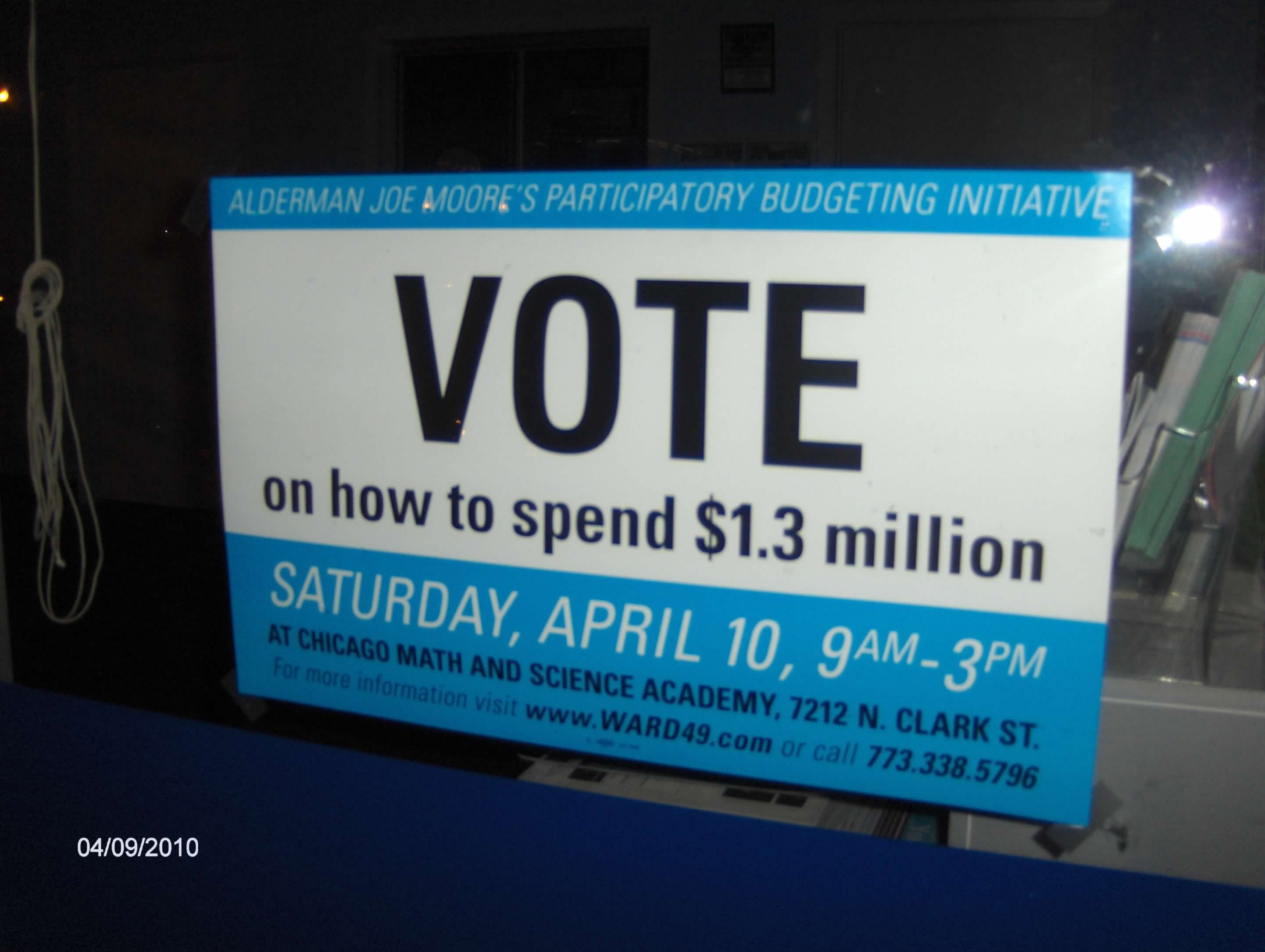
One year shy of turning 30, if you had asked me who my alderman (or alderwoman) was, I would’ve given you a blank stare. But something about signs telling me to vote on $1.3 million made me want to know — even if I didn’t know what an alder(wo)man did.
What is an alderman? Using a location I’m familiar with as an example, Chicago is divided into 50 legislative districts, or wards. Each district is represented by an alderman, who serves a four-year term. All 50 alderpeople comprise the Chicago City Council, which serves as the legislative branch of government of the City of Chicago. They speak on behalf of their respective neighborhoods.
When an alderman participates in participatory budgeting, this person allows residents within that ward to decide how to spend public money. First, residents are asked to join the participatory budget committee to share their ideas. (They can’t just come up with random ideas from home that have nothing to do with their neighborhood.)
ADVERTISEMENT ~ Amazon
As an Amazon affiliate, I earn a percentage from purchases with my referral links. I prioritize featuring intriguing products from small businesses, women-owned businesses and Black-owned businesses. All four of my Substack publications include a MINIMUM of one product sold by a VERIFIED Black-owned business.

Chicago’s annual budget ($1.3 million) is intended to solely be used for the following:
bike lanes
curb replacement
street and sidewalk repaving
street light replacement
Some volunteers may suggest other perks of the neighborhood, such as mural painting around viaducts or dog parks. But the funds should be something that improves on the community and is related to infrastructure.
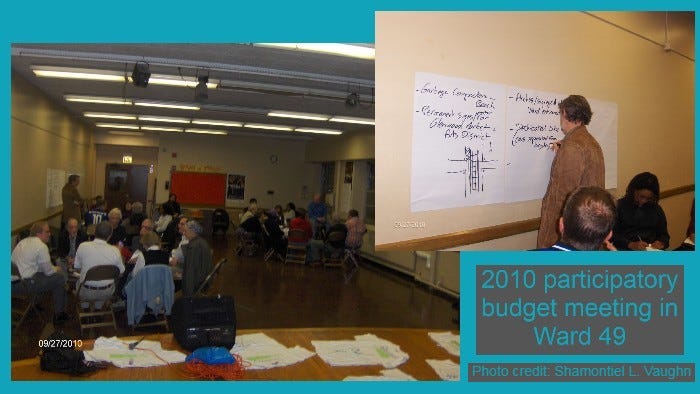
According to Ward 49’s official site, participatory budgeting was first developed in Brazil in 1989. There are now over 1,500 participatory budgets around the world, mostly at the municipal (i.e. city) level. The first participatory budgeting process in the U.S. was launched in Chicago in 2009 by former 49th Ward Alderman Joe Moore.
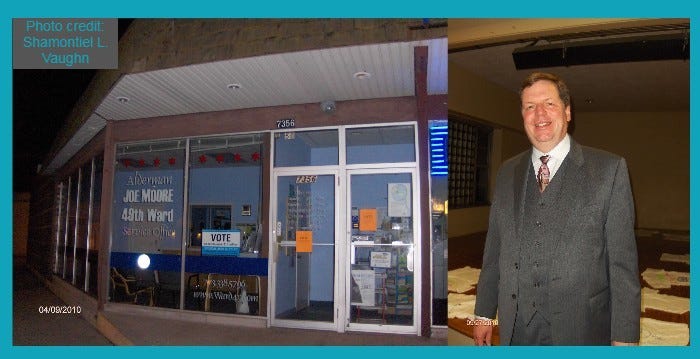
Ald. Maria Hadden, a decades-long resident of Rogers Park who (unfortunately) unseated Ald. Moore in 2019 after he’d held his spot since 1991, continued on in this tradition with participatory budgeting. Four years later, after a second win, she’s currently planning the democratic budgeting process again (as Moore did).
ADVERTISEMENT ~ Recommended Read from Amazon
As an Amazon Affiliate, I earn a percentage for each purchase with my referral links.

So why does volunteering for a program like this matter? Why should people know their alder(wo)man as well as they do their president, governor or senator?
First, according to Pew Research, a 56% majority of U.S. adults say their local elected officials are doing a good job; 26% say they are doing a bad job; and 19% say they are not sure. While they have opinions about governors, what’s catching my attention is how Americans are less likely to offer an opinion of the member of Congress who represents their district, with about one-third (32%) declining to do so.
If I was a betting woman, my guess would be they can’t say much about this person because they don’t know who (s)he is. I brought up the participatory budgeting process to a couple of family members and friends, who said they wished their own alderperson had this kind of measure in place to let residents speak out about city spending.
My next question was simple: “Who is your aldmerman? Alderwoman?”
I was met with a blank stare. And that is 50% of the problem. How does someone know if their alderman or alderwoman is doing a good job if this person doesn’t even know who this person is? The other 50% makes me blame that local politician because residents should know their names.
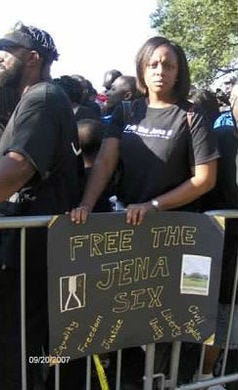
I knew who former Alderman Moore was because I kept seeing him standing outside of el train stops with donuts and coffee, shaking hands and talking to residents. At the time, I had a cloud over my head about the Jena 6 case and asked him what he thought about it, just to get a sense of his views on equal rights. (This was not a great question to ask a local politician, considering he couldn’t do anything about Jena, Louisiana anyway. But I was on a roll and bringing this up to anybody who would listen before I boarded a bus to head to the southern state to protest.)
He vaguely knew the story, and I grumpily walked away while munching on a free donut. (I was still a vegetarian, not a vegan. Let me live.) But his presence by that train stop made me more curious about him because he wasn’t hiding behind his desk.
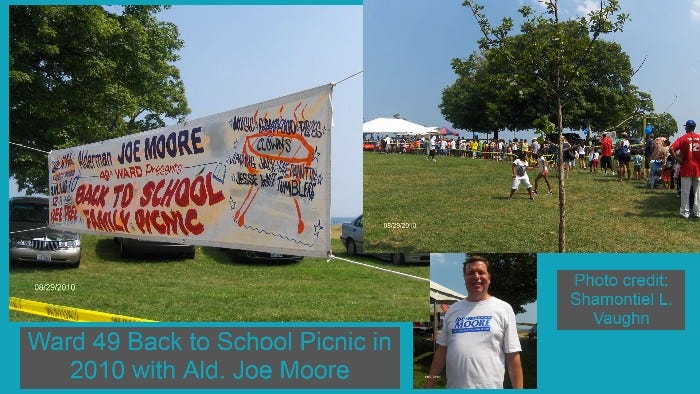
We could see him. I also started seeing him at BBQ events and on social media. While I (naively) voted for Hadden in the past two elections (and wouldn’t do it again), I must admit that Moore was far more visible in places I wasn’t looking for him. In Hadden’s case, I’d have to keep tabs on her calendar to find her.
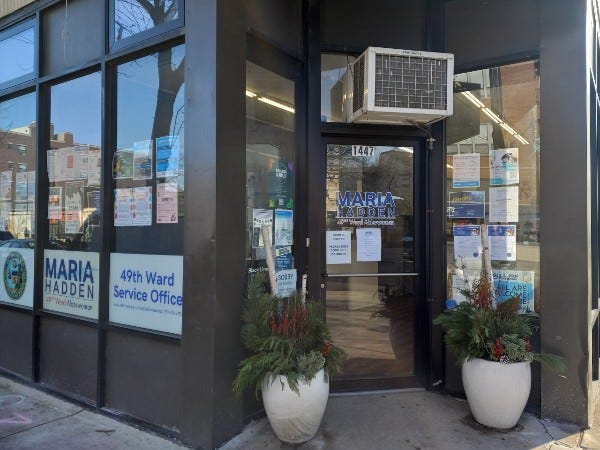
So I can blame myself 50% for not participating in local events that are clearly happening, whether I attend or not. More importantly though, if given the chance, all residents should be weighing in on how they want to better their community regardless of whether they use participatory budgeting or not.
While the “free money” cannot be used for their own individual purposes, if something needs to be done (ex. replacing street lights) and they neither show up to suggest it or vote on election day, then that becomes the fault of the local. The alder(wo)man did that person’s part. And for communities that don’t have this budget in place, just stopping into a city council meeting and hearing what’s going on in the community at least gives you a chance to weigh in.
Look up your alderperson today. See what this person is getting into. See how you can improve on your own community.

Did you enjoy this post? You’re also welcome to check out my Substack columns “Black Girl In a Doggone World,” “BlackTechLogy,” “Homegrown Tales,” “I Do See Color,” “One Black Woman’s Vote” and “Window Shopping” too. Subscribe to this newsletter for the weekly posts every Wednesday. Thanks for reading!